In a recent encounter at Loisaba Wildlife Conservancy, a mature female elephant and her one-and-a-half-year-old calf captured the attention of conservationists.
However, the duo displayed signs of distress, with the mother noticeably limping due to a swollen leg. Despite prior treatment, the injury persisted, highlighting the urgent need for further medical intervention.
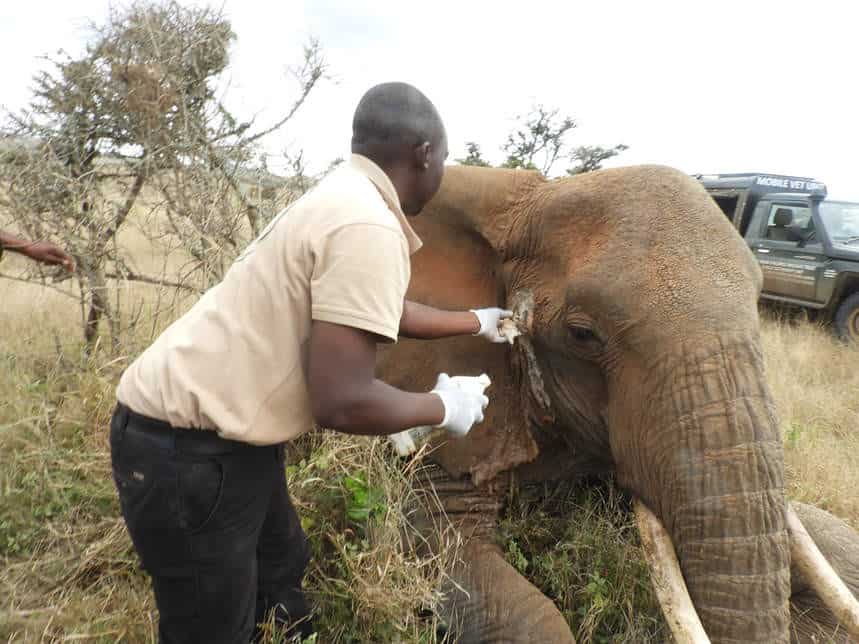
Aiding the distressed elephant began with careful tracking through dense vegetation.
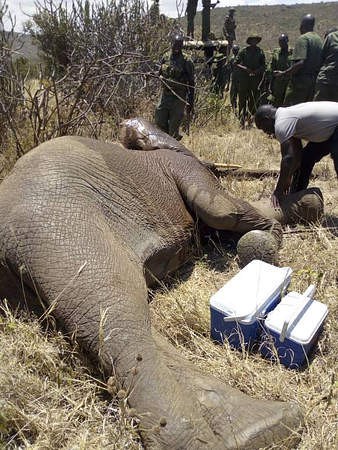
A 15mgs dosage of etorphine Hcl, administered through a 3ml Dan-inject dart from a vehicle, facilitated the immobilization, examination, and treatment of the injured elephant.
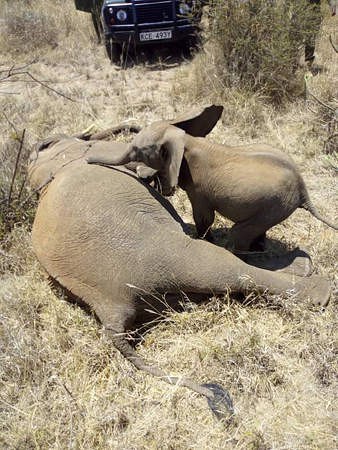
The calf remained close by as the mother received the necessary medical attention while other elephants in the vicinity moved away.
Close inspection revealed a swollen left front leg with a dislocation at the elbow joint, though no visible wounds or external injuries were present.
The cause of the dislocation was suspected of either mating or an accidental fall from a cliff.
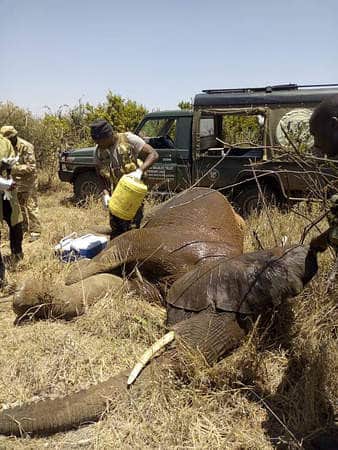
Treatment, including Vitamin B12, Calcium (Calciject®), Dexamethasone injection, and Betamox® antibiotic, aimed to aid the recovery process by reducing joint pain and addressing potential internal infections.
Post-treatment, the elephant regained consciousness after receiving 48mgs of diprenorphine Hcl into its superficial ear vein.
The reunion with its calf showcased a promising outlook, as the elephant demonstrated significant progress, a healthy physique, and the strength to protect its offspring.
Dr. Mijele, a veterinarian from the KWS, expressed gratitude to the David Sheldrick Wildlife Trust (DSWT), the KWS veterinary department, the Mountain Conservation area team, and other partners.
Their collaborative efforts played a crucial role in the Mt. Kenya Veterinary Unit’s swift response to critical wildlife cases, particularly those involving elephants impacted by regional human conflicts.
Read more Elephant News.


