
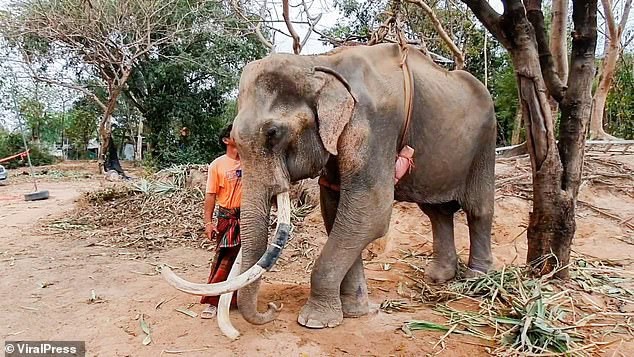
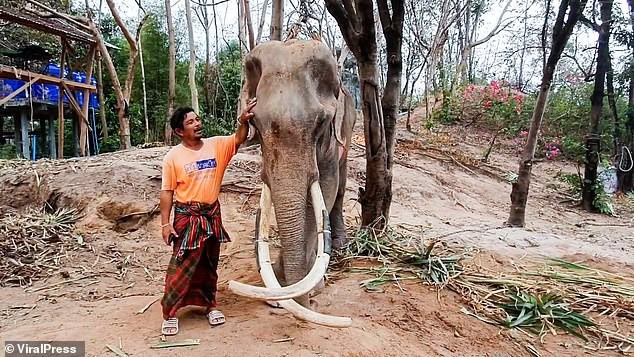
Khun Pan, a 50-year-old male elephant, had been a staple at Chang Siam Park in Chonburi, eastern Thailand, where he gave rides to tourists.
However, the COVID-19 pandemic severely impacted the tourism industry, leaving the park without visitors and Khun Pan without sustenance.
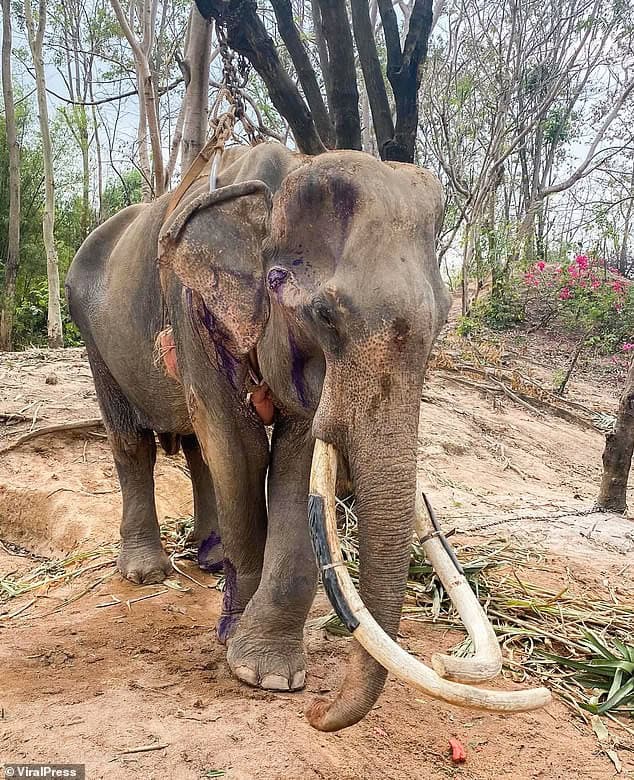
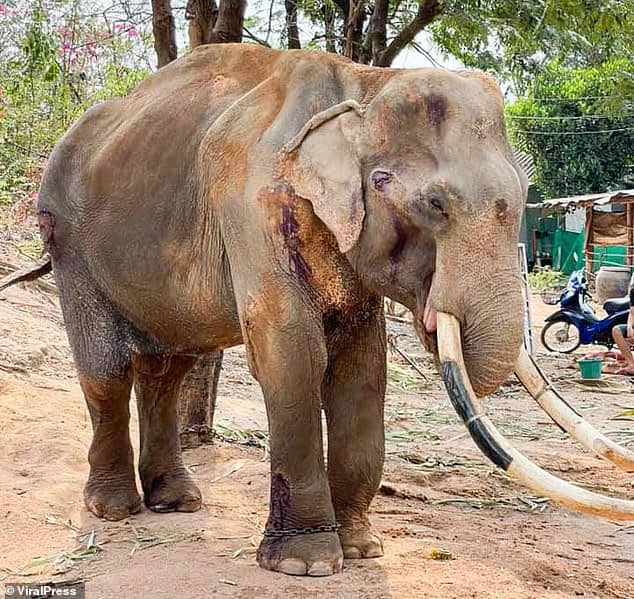
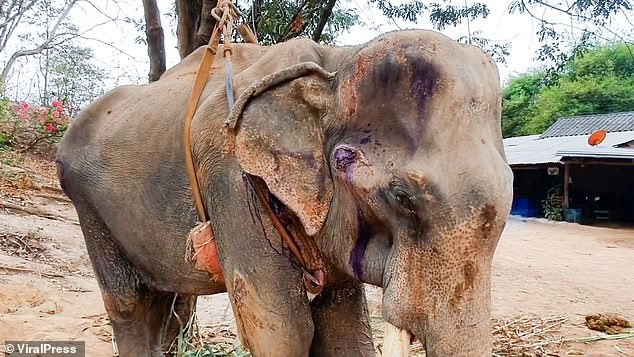
As a result, Khun Pan’s health rapidly deteriorated. The once-robust elephant became dangerously emaciated, with his bones protruding from his skin.
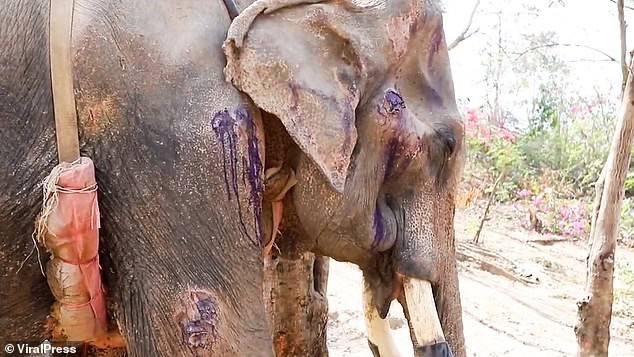
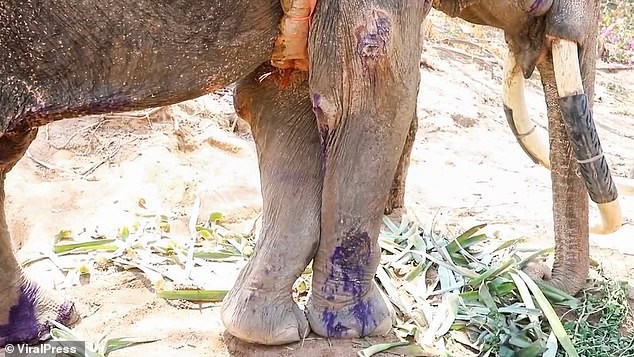
He developed painful sores from lying on hard, dusty ground, and his once-strong ivory tusks weakened and began to crack.
Last Saturday, veterinarians from a nearby animal hospital in Pattaya responded to a distress call from the park.
They found Khun Pan in a dire state, too weak to stand on his own and just days away from death.
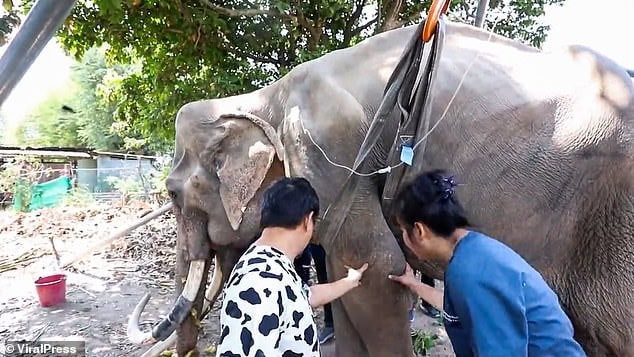
The team used leather straps attached to a nearby tree to hoist the elephant upright and administered a saline IV drip to rehydrate him.
Khun Pan’s owner, Lee Petchkla, 55, explained that the pandemic had left him without the financial means to care for the elephant.
He pointed to the second wave of COVID-19 cases in December and the subsequent lockdown, which prevented him from buying pineapples and other essential food items for Khun Pan.
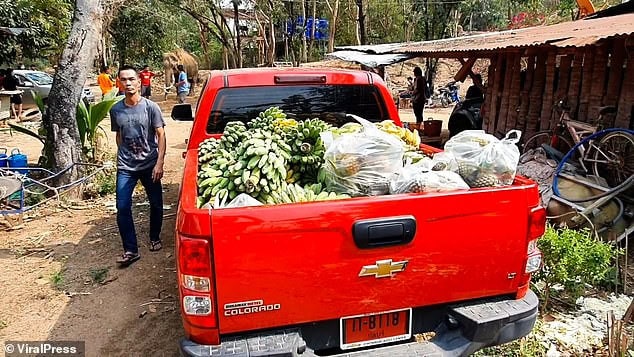
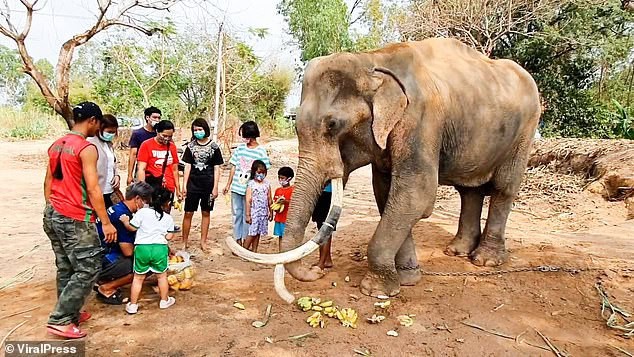
Compassionate locals and veterinarians rallied to help the starving elephant, bringing truckloads of bananas, pineapples, and sugarcane to the park.
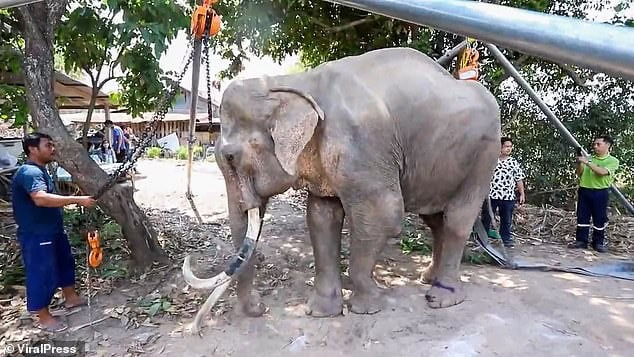
The much-needed nourishment and medical care gave Khun Pan a slight improvement by the next day.
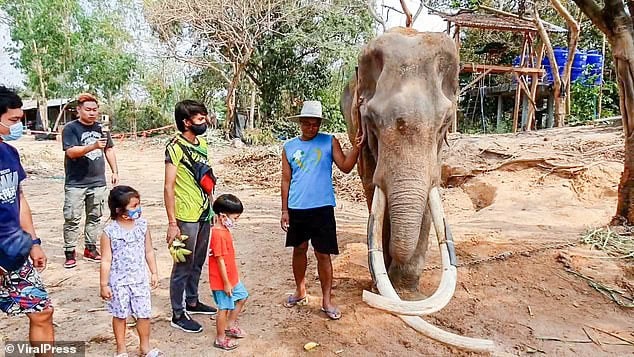
Despite concerns about his health, Khun Pan remains at Chang Siam Park. Locals continue to provide food and care, offering him some relief from his suffering.
In response to this tragic situation, PETA has urged people to avoid supporting facilities that exploit elephants and instead encourage donations to campaigns that protect these animals in their natural habitats.
Read more Elephant News.


