
In a recent aerial patrol over the Ithumba region in northern Tsavo East National Park, the DSWT Aerial Unit made a crucial discovery—a male elephant with a fresh arrow injury.
The sight of the embedded arrowhead, still oozing blood, prompted a rapid response to provide urgent medical assistance.
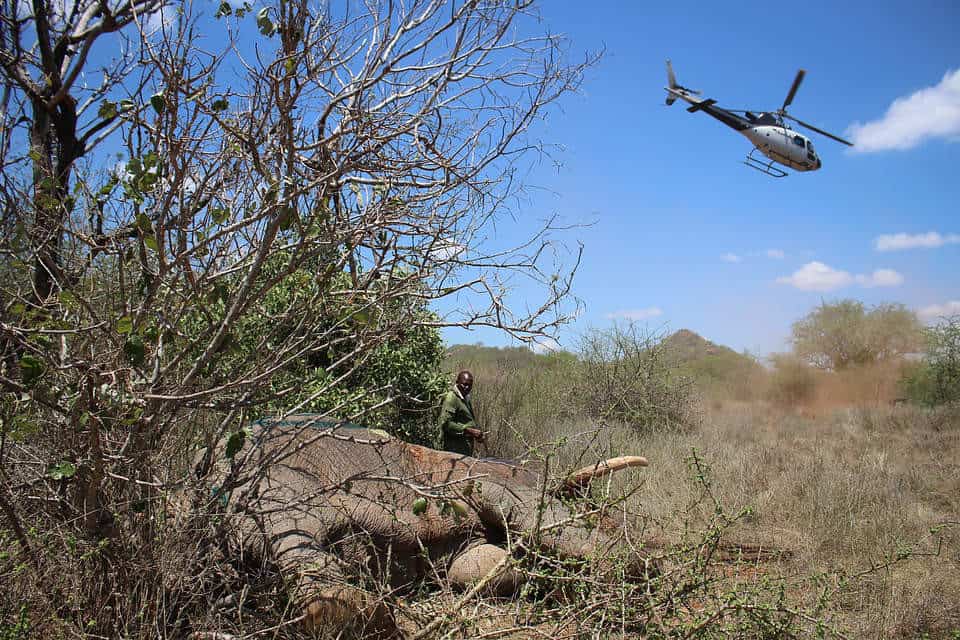
A veterinarian was swiftly transported from Voi to Ithumba via a DSWT pilot, and upon reaching the Ithumba Airstrip, the vet quickly boarded a waiting DSWT helicopter.
Simultaneously, the ground team approached where the wounded elephant was last seen, utilizing vehicles and a tractor. Fortunately, the majestic bull was quickly located and closed by the team.
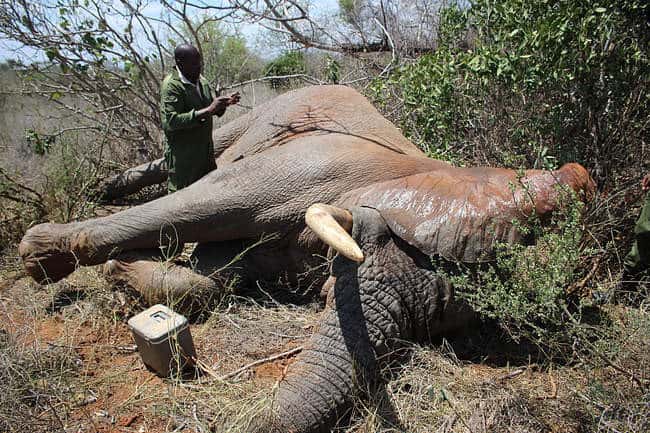
The process of immobilization, assessment, and care unfolded seamlessly. Necessary equipment and medications for darting, including a dart barrel filled with 18 mgs of M99, were prepared.
The elephant, guided to an open space by the helicopter, was gently darted. After approximately 9 minutes, the tranquilizer took effect, rendering the elephant immobile.
With the trunk and ear positioned for optimal breathing, water was gently splashed on the elephant’s ears to cool him down.

Examination revealed a conspicuous arrow wound on the right side of the elephant’s chest, from which blood and bodily fluids were seeping.
Using lengthy forceps, the embedded arrowhead was carefully extracted after expanding the wound.
The wound was thoroughly irrigated with water and hydrogen peroxide, treated with a tin of iodine, and sprayed with oxytetracycline for cleanliness. A protective layer of green clay was then applied.
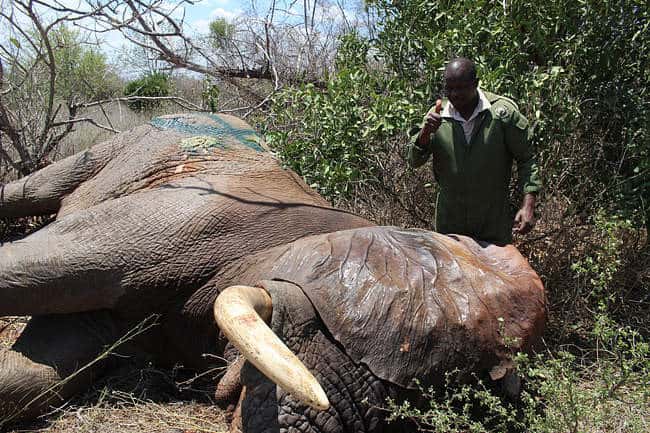
To prevent infections, extended-release antibiotics were administered via the muscle, while Dexamethasone Hcl was delivered intravenously through the ear.
The reversal of anesthesia was executed with Diprenorphine Hcl administered through a noticeable ear vein at a dosage three times higher than Etorphine.
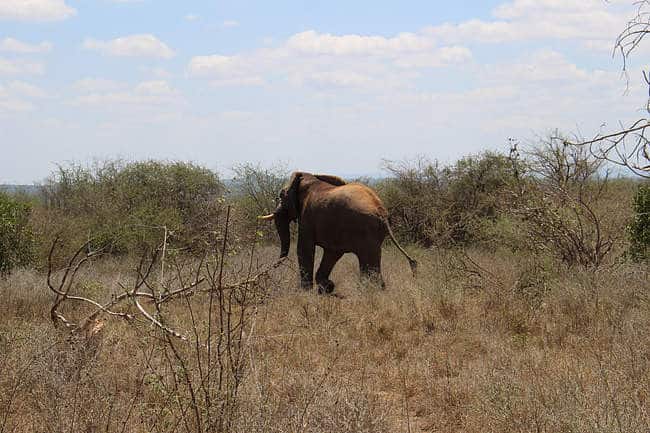
The bull regained consciousness and gradually walked away, showing promising signs of a complete recovery with no indications of harm to vital organs.
The DSWT’s prompt and coordinated efforts highlight the crucial role of wildlife conservation in preserving these majestic creatures, ensuring their well-being in the face of human-induced threats.
Read more Elephant News.


